
Wisconsin Boat Salvage and Evaluation

Salvage Value and Parts Worth Recovering
A damaged boat often holds more value than owners expect. Outboards, controls, electronics, rigging, and deck hardware can carry real salvage value even when the fiberglass is finished. During the evaluation we flag what's worth pulling and what isn't, then factor that into your quote. Sometimes recoverable parts offset a chunk of the cost; other times the smartest path is straight to recycling. Either way you get honest numbers, not a sales pitch built around scrap.

Storm-Damaged and Non-Running Boats
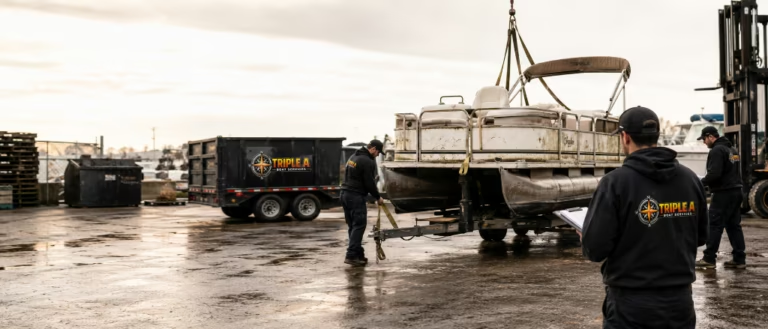
Wisconsin weather is hard on boats. Ice heave, spring flooding, and heavy lake storms leave hulls cracked, motors flooded, and trailers bent. We handle storm-damaged boat recovery whether the vessel is still in the water at a marina, beached on waterfront property, or stranded on a storage lot. Non-running boats and motorboats that haven't turned over in years fall under the same process: assess, recover safely, and remove without dragging debris across your lawn or pavement.
Vessel Types and Where We Work
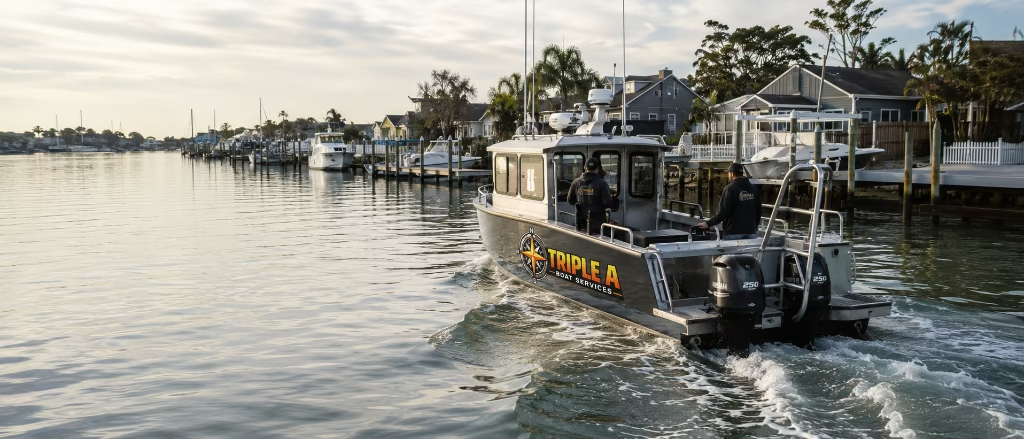
We take on sailboats, pontoons, fishing boats, cabin cruisers, catamarans, and the occasional larger yacht. Pickup happens wherever the boat sits: a private dock in Green Bay, a driveway in Madison, a marina slip near Kenosha or Racine, or an inland lake property up around Eau Claire. Heavily populated areas like Milwaukee County and Dane County see plenty of trailered and dock-stored hulls, and we plan access for tight yards and shared launch ramps before the crew arrives.
Dismantle or Dispose, Done Responsibly
When a boat can't be saved, the work shifts to a clean breakdown. We dismantle the hull, separate metals, fluids, and fiberglass, and route materials toward boat recycling and responsible disposal rather than an illegal dump. This keeps fuel, oil, and batteries out of the watershed feeding the lakes and rivers people fish all season. Abandoned and derelict boats get the same careful handling, with the leftover marine disposal documented so you're not left wondering where it went.

Getting a Quote
Most jobs start with a photo-based quote. Send shots of the boat, the trailer if there is one, and the surrounding access, and we'll come back with pricing and a recovery approach. A free quote keeps the early conversation simple, and you decide whether to move forward. For boat salvage in this region, that upfront clarity is what separates a smooth job from a surprise bill.
FAQ
How is salvage different from just hauling my boat away?
Hauling moves the boat. Salvage adds an evaluation of damage and parts value first, then a recovery plan that ends in either component recovery, dismantling, or disposal. It's the right call for damaged, sunk, or non-running vessels.
Can you recover a boat that's partly sunk at a marina slip?
Yes. We assess the situation, plan a safe lift or float, and coordinate access at the dock or ramp. The approach depends on the boat's size, condition, and how the slip is laid out.
What happens to the parts and materials after dismantling?
Usable outboards, electronics, and hardware may be recovered for resale value. The remaining metals, fluids, and fiberglass are separated and routed to recycling and proper marine disposal so nothing ends up in the water.
Do I need to move the boat to the road first?
Usually no. We work from where the boat sits, whether that's a backyard, storage lot, trailer, or waterfront property, and we plan access ahead of time for tight or shared spaces.
Request an Estimate
Licensed & Insured • Direct response from our team
Find Service in Your Area
Browse counties and cities across the state to find the local boat service page for your area.