
Evaluation and Recovery Planning
Every job opens with a salvage evaluation. We look at where the boat sits, how it can be reached, and what equipment the recovery will take. A pontoon half-sunk at a dock needs a different plan than a motorboat dry-rotting in a backyard. From the rivers near Parkersburg and Wheeling to inland lakes in Kanawha County, access drives the work. We map out the safest path before any winch, trailer, or hauling rig shows up, so there are no surprises and no fresh damage to your dock, lot, or waterfront property.

Parts, Value, and What Gets Pulled
Older and damaged boats often carry salvage value even when the hull is finished. We assess outboards, controls, electronics, rigging, and hardware to see what can be recovered and reused. That parts value can offset the cost of the job, which matters on a tight budget. Owners in Morgantown, Fairmont, and Martinsburg frequently find that a boat they assumed was worthless still holds usable components. We separate what has life left from what does not, then handle the rest through the right disposal channels.
Dismantle or Dispose, Done Responsibly
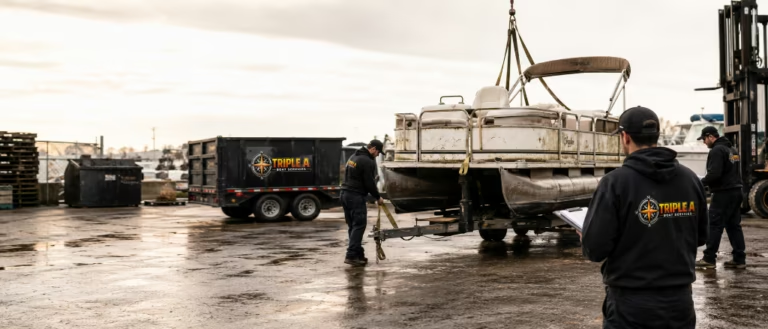
Once value is pulled, the remaining vessel is either dismantled in place or transported out for marine disposal. Boat dismantling lets us break down a large yacht or a waterlogged sailboat that cannot be moved whole. We aim for eco-friendly disposal and boat recycling wherever materials allow, keeping fiberglass, metal, and fluids out of the wrong places. For a derelict boat that has sat for years on a storage lot near Weirton, this is often the cleanest, lowest-stress way to finally clear the space.
Where We Work Across the State
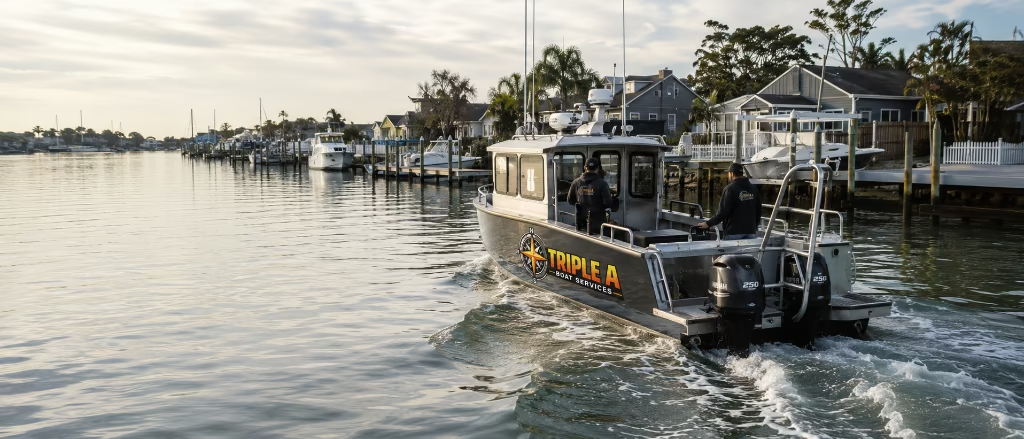
We cover busy boating corridors and quiet private yards alike. Whether your boat is in Cabell County along the Ohio River or tucked in a driveway off a county road, we plan around the site you actually have. Trailers, marinas, narrow gravel lots, and steep waterfront slopes all factor into the recovery. Triple A Boat Services keeps the process practical: we tell you what fits, what does not, and how the boat will leave. Tight or remote spots are part of the routine, not a reason to walk away.

Getting a Quote Started
The fastest way to begin is a photo-based quote. Send clear shots of the boat, its surroundings, and any damage, and we can size up the recovery and give honest pricing without an in-person visit first. From there we confirm timing, access, and whether the plan leans toward salvage parts or full disposal. It is a free quote with no pressure, built to fit storm-damaged, abandoned, and non-running boats throughout the region.