

Storm-Damaged and Non-Running Boat Recovery
High water, ice movement, and seasonal storms leave inland lakes and rivers littered with cracked hulls, sunken pontoons, and motorboats that no longer run. Storm-damaged boat recovery near Burlington and South Burlington usually involves getting a partially submerged or beached vessel back to a safe staging point before any decisions are made. From there we determine whether marine recovery, parts harvesting, or straight disposal fits the situation. Non-running fishing boats, cabin cruisers, and sailboats all get the same practical treatment: assess first, then act.

Abandoned and Derelict Vessels on Your Property
Abandoned and derelict boats become a headache fast, whether they're slumped on a trailer in Colchester, blocking a slip in Essex, or rotting in a backyard near Milton. When a vessel has sat unused for years, much of the salvage value lives in the outboards, electronics, and usable hardware rather than the hull itself. We separate what's worth recovering from what needs responsible disposal, so a long-neglected unwanted boat stops being your problem and the materials get handled the right way.
Coverage Across Vermont's Lake Communities
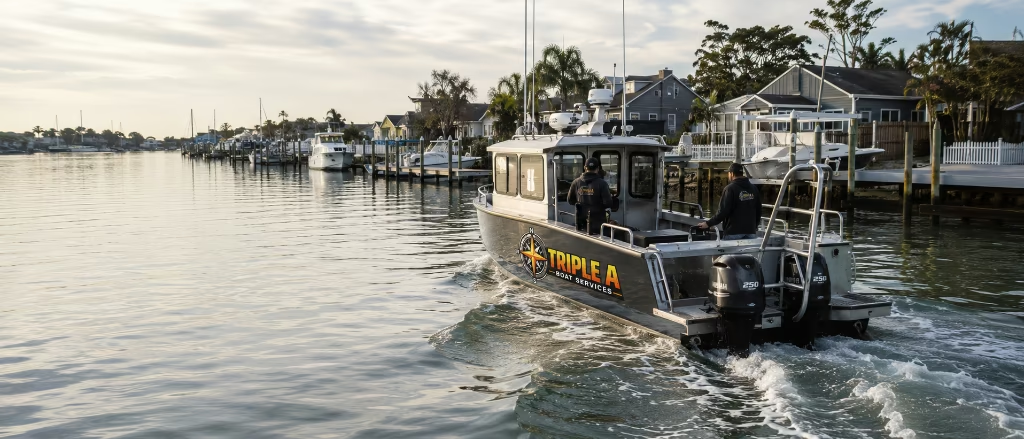
We serve owners throughout Chittenden County and Windsor County, including communities around Rutland, Hartford, and Essex Junction. Whether the boat sits at a private dock, a marina, a storage lot, a driveway, or right at the water's edge, we plan access and equipment to match the site. Tight residential lots, soft shoreline ground, and steep launch ramps all change the approach, so we scope each job around the real conditions rather than a one-size estimate.
Dismantling, Disposal, and Recycling
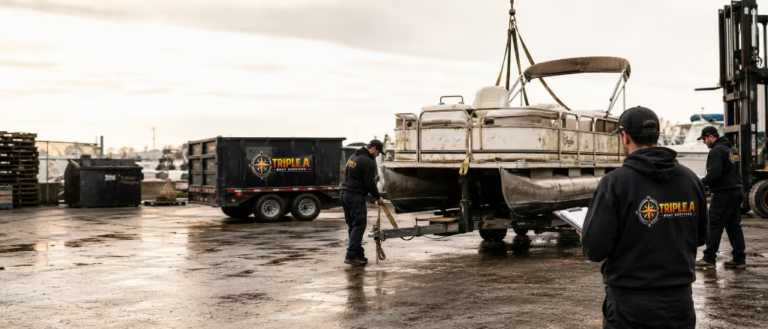
When a vessel is past saving, dismantling and eco-friendly disposal protect both your wallet and the waterway. Boat dismantling lets us pull reusable parts, separate metals and fiberglass, and route materials toward boat recycling where possible. Responsible marine disposal keeps fluids, batteries, and debris out of Vermont's lakes and streams. For sailboats, pontoons, catamarans, and larger cabin cruisers, dismantling on site is often more efficient than transporting an intact wreck across the region.

How Pricing and Quotes Work
Pricing depends on size, condition, location, and how much recovery versus disposal is involved. A photo-based quote is the fastest way to start: send clear images of the boat and its surroundings, note the access, and we'll outline expected steps and a realistic free quote. If salvage value offsets part of the cost, we factor that in. The goal is a transparent plan with no surprises once crews and equipment arrive.