

Salvage Evaluation and Recovery Planning
Every job begins with a salvage evaluation. Send photos of the deck, hull, engine compartment, and trailer, and we can usually outline parts value and a recovery approach without a site visit. From there we map the logistics: access angles, whether the boat sits on a trailer or has to be lifted, and how close we can stage equipment near a dock, storage lot, or waterfront driveway. Coastal and river sites get extra attention because tide, current, and bank conditions change the plan. Good planning keeps the recovery safe and avoids surprise charges later.

Storm, Derelict, and Non-Running Vessels
Pacific storms and winter swell leave their mark on Oregon boats every season. We handle storm-damaged boat recovery for sailboats torn off moorings, pontoons swamped on inland lakes, and motorboats cracked open on rocks. Abandoned and derelict hulls sitting in backyards, marinas, or rented storage lots also fall under salvage when the owner wants value pulled before disposal. Whether it is a small fishing boat or a tired cabin cruiser, the same process applies: assess, recover what matters, then move the rest responsibly.
Parts Value, Dismantling, and Recycling
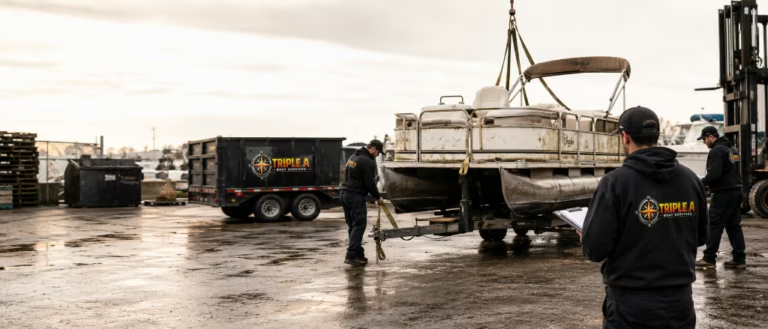
When a vessel is past saving, dismantling turns it into something useful again. Outboards, controls, electronics, hardware, and rigging often come off intact and find a second life. Fiberglass, aluminum, and steel are separated for recycling rather than dumped whole. We keep fuel, oil, and batteries handled properly so nothing leaches into a waterway or soil. This eco-friendly approach matters in a state where rivers and the coastline sit close to so many boating communities, and it keeps your old boat from becoming a long-term liability.
Coverage Across Oregon Markets
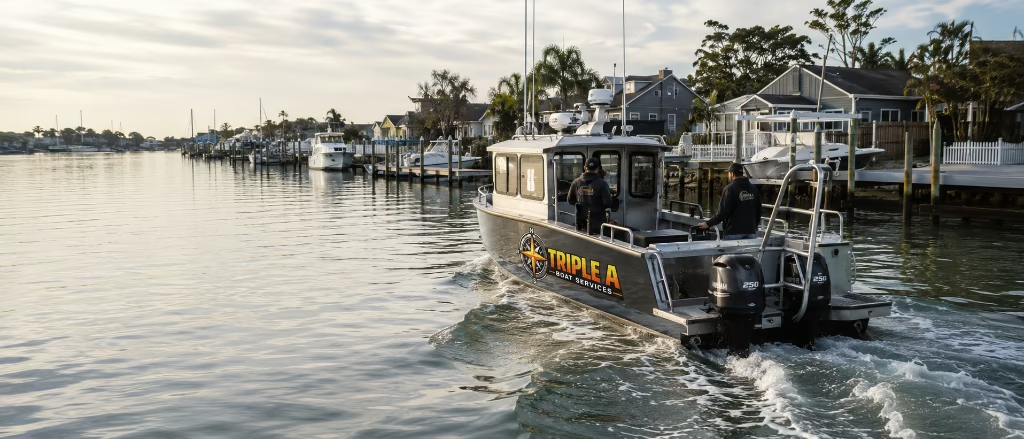
Triple A Boat Services works the populated corridors and the quieter waterways alike. That includes Portland, Salem, Eugene, Gresham, Hillsboro, Bend, Beaverton, and Medford, plus the surrounding stretches of Clackamas County and Washington County. We reach docks, marinas, private yards, and waterfront property whether the vessel waits on a trailer or sits stranded near the water. If you are unsure we cover your spot, ask with photos and we will tell you what a recovery looks like.

What to Expect on Pricing
Pricing reflects the boat's size, condition, location, and how much salvage value offsets the work. A photo-based quote gives you a free, honest starting number before anyone shows up. Recoverable parts can lower your cost, while tight access or a fully submerged hull can raise it. We explain the breakdown plainly so you can decide whether to recover, dismantle, or dispose. No pressure, no padded line items, just a clear figure for your situation.