
What a Salvage Evaluation Looks At
Every job opens with a real assessment, not a guess. We weigh the parts value still living in the boat: outboards, controls, electronics, hardware, and rigging that may be worth recovering before the hull is broken down. We also factor access, weight, and how the vessel is supported. A non-running boat half-buried in a yard pulls a different plan than one resting at a slip with clean marina access. That salvage evaluation tells us whether to recover, dismantle, or dispose, and it keeps your quote tied to reality.

Damaged, Storm-Hit, and Abandoned Vessels
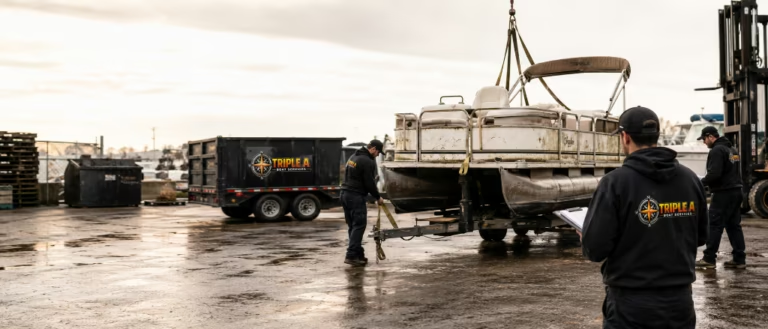
Coastal weather and inland flooding leave plenty of boats that will never run again. We handle damaged boat salvage and storm-damaged boat recovery for hulls cracked, swamped, or knocked off their blocks. Abandoned and derelict boats left on waterfront property or a neglected trailer get the same careful treatment, because old fuel, fluids, and broken fiberglass all need proper attention. Marine recovery means we control the mess instead of dragging it across your lot, whether the vessel sits on a river, an inland lake, or a backyard cradle.
Serving Markets Across the State
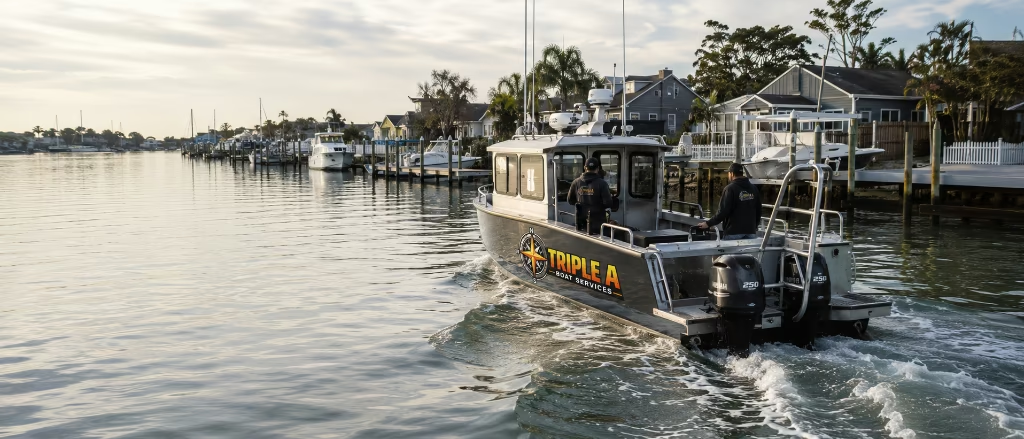
We work throughout the region's busiest boating areas, from Boston and Quincy on the coast to Worcester, Springfield, and Lowell further inland. Densely populated Middlesex County and Worcester County keep us moving between marinas, storage lots, and private driveways. Whether you've got a fishing boat in Brockton, a sailboat near Cambridge, or a catamaran taking up space in Lynn, we bring the right gear for the recovery and route the materials toward recycling and marine disposal wherever it makes sense.
Recover, Dismantle, or Dispose
Once the plan is set, the path is clear. Boats with salvage value get parts pulled and sorted; outboards, electronics, and hardware come off before the rest is processed. Hulls past saving are dismantled and routed toward boat recycling and responsible disposal so usable metal and components don't go to waste. Smaller motorboats, pontoons, and larger yachts each follow their own breakdown sequence. The goal is the same every time: a clean lot and an eco-friendly disposal trail you don't have to manage yourself.

Simple, Photo-Based Quoting
You don't need to drag the boat anywhere to get a number. Send clear photos of the vessel, its surroundings, and how it's supported, and we'll size up the recovery and return a free quote. That photo-based approach keeps pricing transparent and saves a wasted trip. When you're ready, our crew handles scheduling, the haul, and the disposal so the whole job stays off your plate.