

Recovery Planning Across Iowa Waters and Yards
Conditions vary widely from inland reservoirs to the rivers along Davenport and Sioux City, so recovery planning is site-specific. A pontoon half-sunk at a marina dock needs a different approach than a cabin cruiser on a trailer behind a house in Cedar Rapids or a fishing boat stranded in a backyard. We map access, weight, and tow points before we commit equipment. That planning protects waterfront property, neighboring slips, and the crew, and it keeps a tricky recovery from turning into a second problem.

Parts Value and Salvage Value
Not every damaged hull is scrap. Outboards, controls, rigging, electronics, and clean hardware often carry real salvage value even when the boat will never run again. During the salvage evaluation we identify what is reusable and factor that into the overall picture, which can offset the work of removal. When the numbers favor recycling components, we route them that way. When a vessel is too far gone, we say so plainly rather than overselling a recovery that does not pencil out.
Dismantling and Responsible Disposal
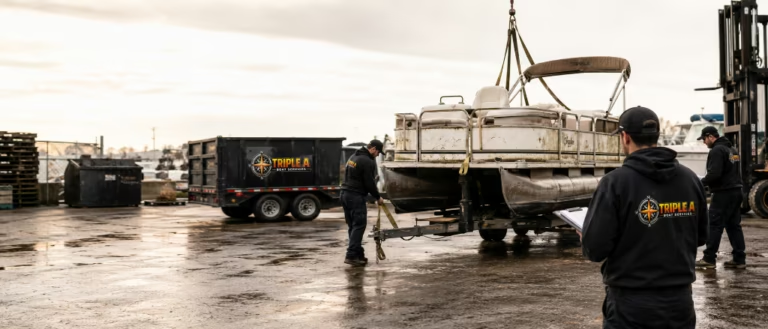
When a boat cannot be saved, dismantling becomes the practical choice. Breaking a derelict sailboat or motorboat down on site can be the only way to move it from a tight driveway, a packed storage lot, or a soft shoreline. We separate metals, salvage usable parts, and handle fluids and the remaining hull through responsible disposal and recycling channels. The goal is a clean exit for the owner and a result that does not leave debris behind in or near a waterway.
Where We Work in the State
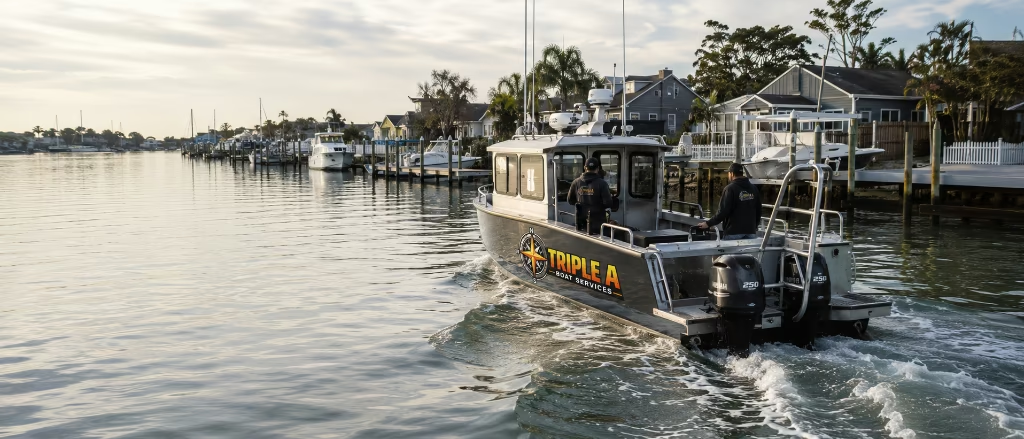
Iowa requests reach us from Polk County and Linn County population centers as well as smaller lake communities and river towns. We regularly handle jobs around Des Moines, West Des Moines, Ankeny, Iowa City, and Waterloo, covering docks, marinas, trailers, private yards, and waterfront parcels. Whether the vessel is an old fishing boat or a larger cabin cruiser, the same evaluation-first process applies so the recommendation fits the actual site and condition.

How a Photo-Based Quote Works
Most jobs start with a few photos and basic details: type of boat, where it sits, access, and what damage it has. From those, we can give a photo-based quote and an early read on whether salvage value is in play. There is no charge to ask, and the estimate covers recovery, any dismantling, and disposal so there are no surprises later. If you would rather compare options first, our removal and salvage pages lay out both routes clearly.