

Salvage Evaluation and Parts Value
Outboards, controls, electronics, rigging, and hardware can still carry salvage value even when the hull is finished. During evaluation we identify which components are worth pulling, what the realistic parts value looks like, and how that offsets the cost of recovery and disposal. A storm-damaged motorboat with a sound engine is a different conversation than a derelict fishing boat that is purely a disposal job. We tell you honestly which one you have so the decision to recover, dismantle, or dispose is grounded in real condition, not optimism.

Damaged, Storm-Hit, and Abandoned Vessels
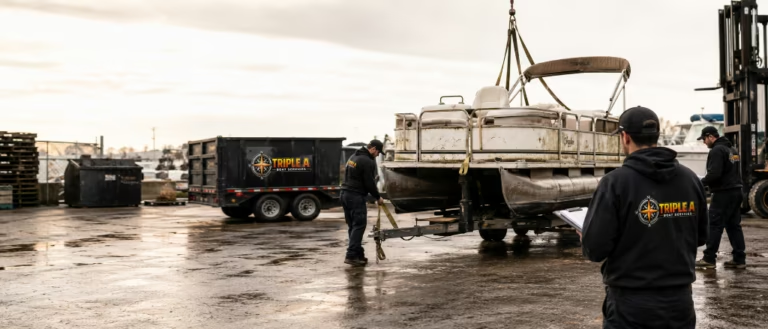
Indiana weather, ice seasons, and long off-water storage take a toll. We handle storm-damaged boat recovery, abandoned and derelict vessels, sunk or partially flooded hulls, and non-running boats that haven't moved in years. Whether the situation is a neglected sailboat behind a property in Bloomington or a damaged catamaran stranded near a Hammond marina, the process is the same: assess access, plan the safe lift or pull, then recover the vessel without tearing up your dock, yard, or waterfront property.
Where We Work Across the State
We serve owners and property managers in major markets including Indianapolis, Fort Wayne, Evansville, South Bend, Fishers, and Carmel, along with the high-population areas of Marion County and Lake County. Pickups happen from private docks, marinas, storage lots, trailers, driveways, and backyards. Inland lakes and rivers are our usual setting, so recovery planning accounts for ramp access, gate clearance, and tight shoreline approaches. If a boat can be reached, we can usually build a workable recovery and disposal plan around it.
Dismantling and Responsible Disposal
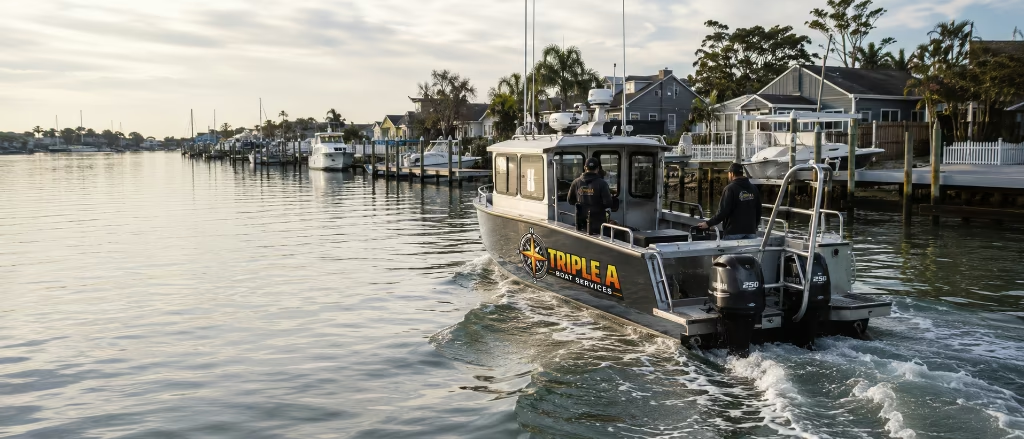
When a vessel reaches the end of its life, we dismantle it methodically. Reusable components are separated for parts, fluids and batteries are handled properly, and remaining material is routed toward recycling and eco-friendly disposal wherever practical. This keeps marine disposal cleaner and reduces what ends up as waste. The goal is a complete removal and disposal that leaves your dock, trailer, or driveway empty and your conscience clear, whether the boat is a small fishing rig or a larger cabin cruiser.

How a Photo-Based Quote Works
Start with a few clear photos of the boat, its condition, and how it sits on your property. From those, we provide a free quote and outline pricing for evaluation, recovery, and disposal so there are no surprises on the day. A photo-based quote also lets us flag access challenges early, like a steep slope or a narrow gate, and plan equipment accordingly. The faster we see the vessel, the faster we can confirm whether salvage value applies or disposal is the practical path.