

Recovery Planning for Damaged and Stranded Boats
A boat that has shifted off its blocks, taken on water, or grounded after a storm calls for a recovery plan, not a guess. We map the access route, decide on lift or float-out, and confirm trailer and transport needs before anyone touches the vessel. Whether it sits in a Washington storage lot, a private waterfront property, or against a marina piling, the goal is to recover it safely without adding damage. Clear planning keeps surprises out of the day and the cost line.

Reading Parts and Salvage Value
Not every damaged boat is junk. We check outboards, electronics, rigging, controls, and deck hardware for resale or reuse potential. A flooded cabin cruiser may still have a clean lower unit; a wrecked fishing boat might hold sound trailers and gear. When salvage value offsets the work, that shows up in your quote. When it does not, we say so plainly so you are not paying to chase parts that are already gone.
Dismantling and Responsible Disposal
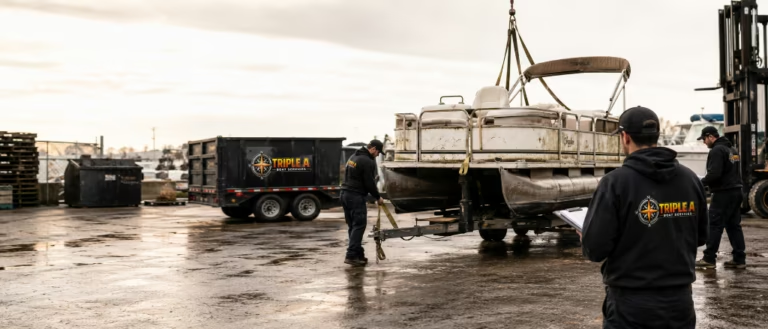
When a vessel is past saving, we dismantle it methodically. Fluids, batteries, and contaminants come out first, then fiberglass, metal, and reusable components are separated for recycling or eco-friendly disposal. This matters near the District of Columbia waterways, where careless scrapping can foul rivers and marina basins. Triple A Boat Services handles old, unwanted, and derelict boats so the materials are routed responsibly rather than left to rot in a backyard or driveway.
Vessels and Locations We Work With
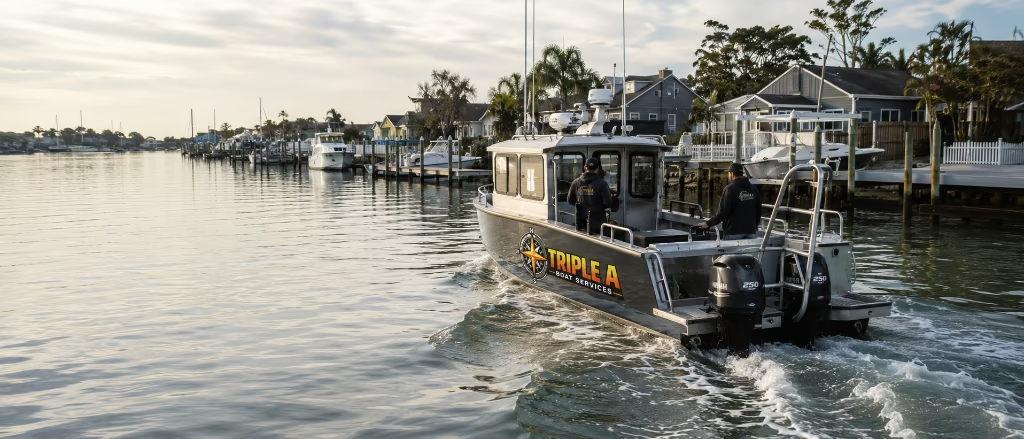
We handle sailboats, pontoons, motorboats, catamarans, cabin cruisers, and larger craft, whether they run or not. Boats come to us from docks, marinas, storage lots, trailers, and inland or riverfront spots throughout the region. Abandoned and storm-damaged boats are common after a hard season, and a non-running vessel parked too long becomes a liability for the owner and the property. We make the path from evaluation to clearance straightforward.

How Pricing and Quotes Work
Most projects start with a photo-based quote. Send images of the boat, its location, and any visible damage, and we give you a free quote that reflects access, size, and salvage potential. There is no obligation, and the estimate spells out whether we recover parts, recycle, or simply dispose. That up-front clarity is how boat salvage district of columbia owners avoid the runaround and decide with real numbers in hand.