

Where We Work Across the State
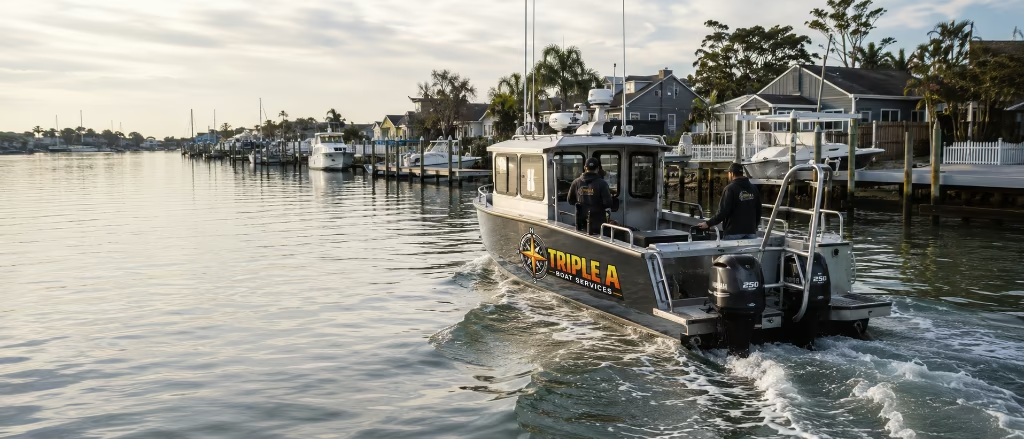
Boating here spreads from the Front Range metros to mountain reservoirs and high-plains lakes. We reach owners in Denver, Colorado Springs, Aurora, Fort Collins, Lakewood, Thornton, Arvada, and Westminster, plus the surrounding stretches of Adams County and Denver County. Whether the boat is parked at a marina, wedged in a storage lot, resting on a backyard trailer, or stranded near a waterway, we plan recovery around the access you actually have. Tight driveways, soft ground, and shared docks are normal, and we work them carefully.

Boats and Conditions We Handle
Pontoons, fishing boats, motorboats, cabin cruisers, sailboats, and the occasional larger vessel all come through salvage evaluation. Condition matters more than category. A non-running motorboat may still give up a serviceable lower unit and electronics, while a derelict pontoon might be valued mostly for aluminum recycling. Abandoned, water-logged, and storm-hit hulls each get inspected on their own terms. We tell you plainly whether the smarter move is to recover parts, dismantle the structure, or simply dispose of what is left.
How the Salvage Process Works
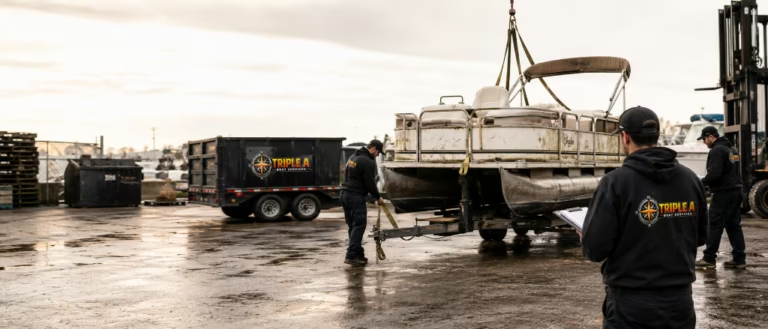
It begins with a photo-based quote. Send images of the hull, the engine, the trailer if there is one, and the surrounding access, and we respond with a clear read on options and pricing. From there we schedule a recovery window, bring the right equipment for the site, and either pull the whole vessel or break it down on location when access is limited. Components with parts value are set aside, and the remaining material is sorted for marine disposal and recycling rather than dumped. You get a straightforward outcome without the back-and-forth.
Responsible Dismantling and Disposal
Old fiberglass and marine waste do not belong in a regular dump, and we treat that seriously. After usable hardware and electronics are removed, fluids are drained and handled correctly, metals are separated for recycling, and the hull is dismantled into manageable sections. The goal is eco-friendly disposal that keeps as much as possible out of a landfill. This matters across Colorado, where shared waterways and storage yards stay cleaner when a single derelict boat is cleared the right way instead of left to leak and decay.

Getting a Clear Answer Fast
You should not have to negotiate to learn what your boat is worth. Triple A Boat Services gives you a free quote built on real photos and a real recovery plan, so the dismantle-or-dispose decision is easy to make. If you are comparing salvage against simple removal, both paths are available and we will explain the tradeoffs honestly. The result is one less thing taking up space, money recovered where it exists, and a vessel handled the way it should be.